Showing posts with label literacy. Show all posts

Sunday, March 3, 2013

Around the World in Kindergarten

We are continuing to work on our new unit about the continents. It is a steady battle of teaching the standards or teaching the unit. This one is engaging to the kids by having them gain schema through the use of nonfiction text on the continent and the fiction stories involving the continent.
We activated prior knowledge (APK) through brainpop jr. by watching the video on continents and oceans then we read a book/atlas on Europe. This was part of the N part of the GANAG model (new knowledge). While we read this book, they took notes (another high yield strategy), either by drawing pictures or taking notes with words. The first one I am very proud of... this student came to my classroom knowing nothing and really struggled with the social dynamics of a classroom. Just look at all those sounds he was able to get down as well as the concept of details in a nonfiction text. The next one is from a higher student who is able to take those notes as well as make a judgment about what place she would like to visit.


Saturday, May 5, 2012

digestive presentations


We technically began unit 6 during the week of testing, but didn't really get into the meat of it until testing was over. We having really been working on taking notes in our reading response notebooks. We really struggled with translating their great thinking to paper at the beginning of the year and reading response notebooks have been a great place for them to record their thoughts about a particular book, interact with the objective, and a place for them to practice anything new we work on. As a teacher it is wonderful that all of their materials are in one place. I walk around while they are working and score them on our objective score sheet, it makes grading beyond super easy! Well we began our unit by having students take notes on the digestive system by reading a few books and watching several videos. We discussed how to organize our notes and site our sources. Everyday it still blows me away that I am having 2nd graders do research, take notes, and site different sources. I didn't do that stuff until high school.


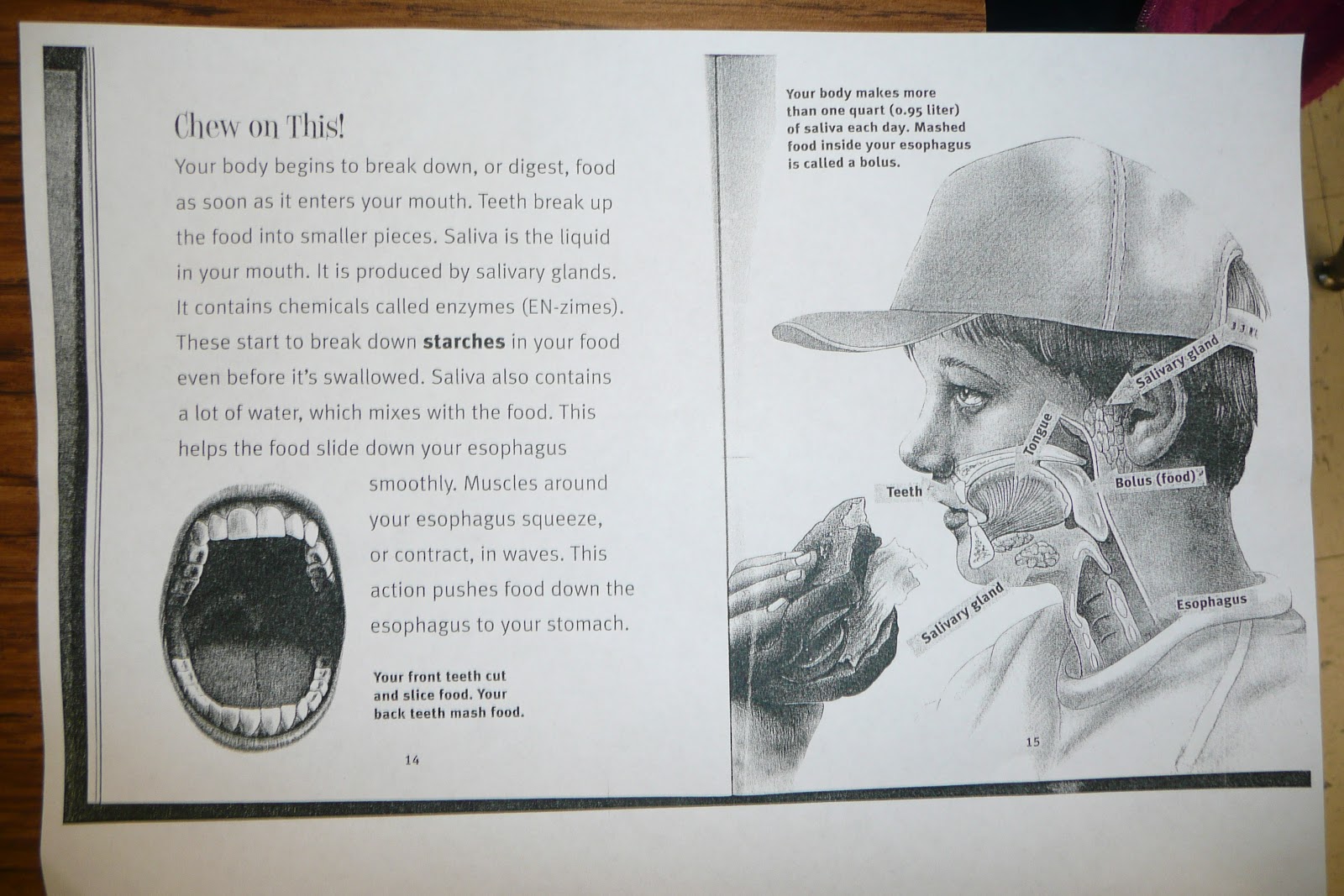
After we had taken notes on the digestive system as a whole we worked on taking notes on a complex text. I have a variety of student text levels in my room all the way from a DRA 3 to a DRA 40+, so for some it would be more difficult then others. We have an example page from our book and practiced taking notes on that.

Then we practiced taking our note sheet and using that information to come up with 3 key facts and then a concluding statement about why scientists think this information is important. This went right along with what we had already learned about having students create meaning with the 3 questions of "What does it say?" ( taking notes), "What does it mean?" ( summarizing key facts ), and "What does it matter?" (why is this information important). After we we practiced with our class sheet, we broke up into groups to take notes on our individual chapter. Students took notes while reading in their reading response notebooks.
After students finished their notes independently, they got together in their groups to discuss their thinking and what they thought were the most important key ideas from the text. This hits several CCSS objectives, such as "Describe how reasons support specific points the author makes in a text" "Identify the main purpose of a text" " "Write informational texts in which they introduce a topic, use facts to develop points" " Participate in collaborative conversations with diverser partners".


In the group were designated leaders who lead the conversations and made sure everyone had an opprotunity to talk. After they had created their 3 key points, students then put notes away and worked together to create their concluding statement. This statement was about why this chapter was important and why someone should read it. After this we came back together and talked. For many students the concluding statement was the most difficult. They wanted to summarize the learning, instead of telling why it was important. Then we worked on how to take that information and make it into our presentations. Students were given various jobs including creating diagrams, reading and inputting information into a smartboard presentation, and leading and supervising both groups.


They did wonderful! After they were done we used smartnotebook recorder to record the information and create a window movie player video to upload to our class webpage so they could share with their parents. All of the students showed alot of pride in their work and were very happy with the end result. As I was picking the leaders, I picked one student who is a resource student who at times has difficulty with authority. He has great potential, but he himself struggles to see it. At the end of the group project time, I was reminded again why it is important to not look at the student before me, but beyond that to what they can be. I have another child in my room who has been struggling a lot this year and we are looking at a variety of ways to help him. He really struggles with group work and staying focused. So my "leader" sat down with him and had him look for how to correctly spell all the words in the presentation. He did this with no direction from me, but because that was his job. He said it was his job to help all his group members to do their job, and this was a job he could do. :) 

Friday, March 23, 2012

Nonfiction with Unit 5


When we set out planning our unit, we decided to do the first part of the week as nonfiction learning about the country and then the second part as the fables from the country. So we began with China nd then moved to Ireland. We began with a review of nonfiction text features and discussed how internet sites have nonfiction text features as well.


I had the kids make a quick list of nonfiction text features in their reading notebooks. Then they shared this information with a partner. We made our class list of nonfiction text features. Then looked at the ones we had and discussed how they were similar and different from the ones we see on websites.

We pulled a lot of our information from national geographic for kids. They had several of the nonfiction text fetures such as headings, bold words, etc. that we were able to discuss and use to located information. Then the kids began making a web in their notes by taking notes while we went through the different web pages.

Saturday, February 18, 2012

Ruby Bridges...

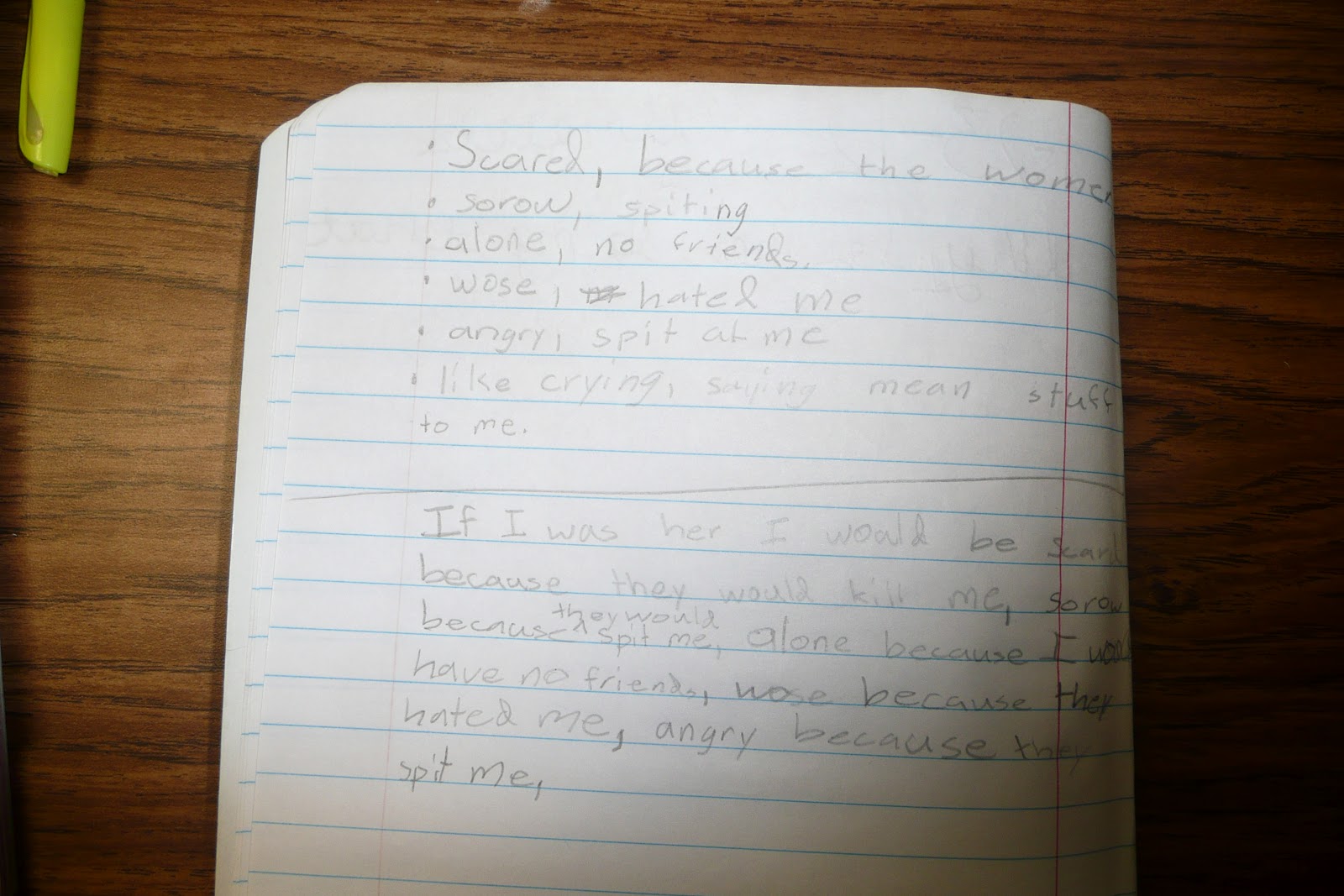
We are wrapping up our unit on "The Long Road to Freedom" this week.  I really wish we had more time to focus on some different important people...Ruby Bridges. I really think the kids would be able to relate to her so much better if we had some additional time. I know I learned about her as a child, but now I look back at it as a teacher of 7 and 8 years old...a mom of a 6 year old...a grown up...It is just beyond me how such a little girl was able to survive such persucution. We started our study with this video .  Wow! The first time I watched it I had tears in my eyes. After we watched that we did a quick write on "How we would feel if we were Ruby Bridges." It was interesting to see how different students reacted to the question. After we shared our thougts we watched the "real" Ruby Bridges talk about her experiences.


Several different opinions on what they would do if they were Ruby Bridges.


Saturday, February 4, 2012

Similar and Different


We have been reading all about the Civil Rights Movement as a ending to our 4th unit in the common core units. This week we worked on the beginning of the "sit in" movement with the Freedom on the Menu and Sit ins.


We read each of the books and made connections between this protest movement and slavery. Using Freedom on the Menu, we worked on our 3 important questions "What does it say?", "What does it mean?" and "What does it matter?" We used our "What does it say?" to practice summarizing and "What does it mean?" to practice inferencing using characters feelings.  The final part "What does it mean?" was a chance for them to practice author's big idea or what the author is trying to teach us. The funny part is that most of the kids struggled with "What does it mean?"

 The next step we worked on was comparing the two stories and what was similar and different between the two of them.  We recently went to a conference and learned that our kids need a chance to struggle with "frustration" level text. This was a difficult concept for me to get.  As a teacher who has been trained in "instructional" and  "independent" level texts it was a struggle, but looking at how some kids have not had their reading levels increase at the level I wanted I was willing to try anything. So we have worked on giving them a chance to struggle through and then using that text as evidence for writing about their thinking. So they got a sample of text from each book and then write about how it was different.


Mentor Authors

We begin our study of Ezra Jack Keats.  His books are simple and easy for 2nd graders to copy.  We pulled out A Snowy Day to begin our study.  We also watched a video where the "real" Ezra Jack Keats is talking about his ideas and where they come from. As a class we talked about where Keats might have gotten his ideas, we came up with "his ordinary life." We created a list of ordinary life topics we could write about. The next day we looked through Keats book A Letter To Amy.   The 2nd graders got into small groups and looked through his book as a group. The ideas they came up and are reflected in the anchor chart.

Thursday, January 26, 2012

Freedom

We are working on our 4th unit in the new common core curriculm units. We are currently working on freedom. Today we were reading Freedom Summer and discussing the difference between it and The Other Side.

The kids were coming up with some wonderful ideas. I am continuing amazed at how deep their thinking as become as we have moved through the common core units. They are understanding such complex themes...We are working on putting our thinking down into different notebooks...reading for reading, writing for writing...Check out some of our thinking below...